
Victoria Garage Door Guide
What Actually Drives a Garage Door Repair Bill Here
A look at what actually pushes garage door repair costs up in Victoria, TX, tied to the age of the housing stock here and how the local climate wears on hardware.
- Licensed & Insured
- Same-Area Service Calls
- Upfront Pricing
The Cost of This Job
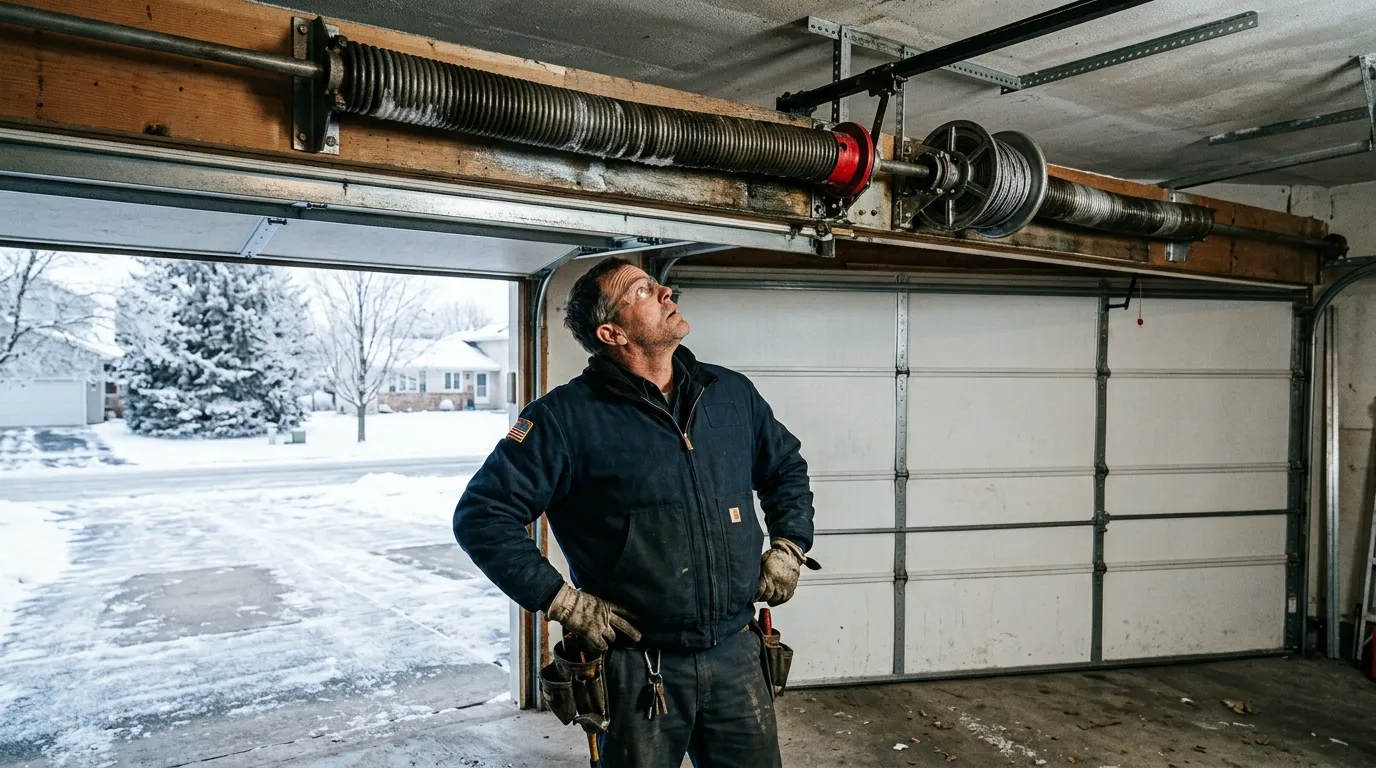
Most of the calls we take in this service area come from houses built between 1969 and 1997, with the median landing around 1983. That matters for cost more than people expect.
A house from that window usually still has its original torsion hardware, or a replacement from decades back, and that hardware doesn't always match what's on the shelf today. Finding a compatible spring or drum for a door that old sometimes takes longer and costs more than swapping a part on a house built last year.
With median household income here at $61,029 across roughly 1,397 households, we try to be straight about when a repair makes sense versus when it doesn't. If the opener, springs, and track are all near the end of their life at the same time, patching one piece often just delays the next call. We don't have a price list to hand you here - every door and every failure is different - but we'll tell you on-site whether you're looking at a repair or a door that's better off replaced outright, and why.
The honest limitation: if a part for an older system has to be special-ordered, that adds days, not hours, to the job. We won't pretend otherwise.
The Seasonal Bit
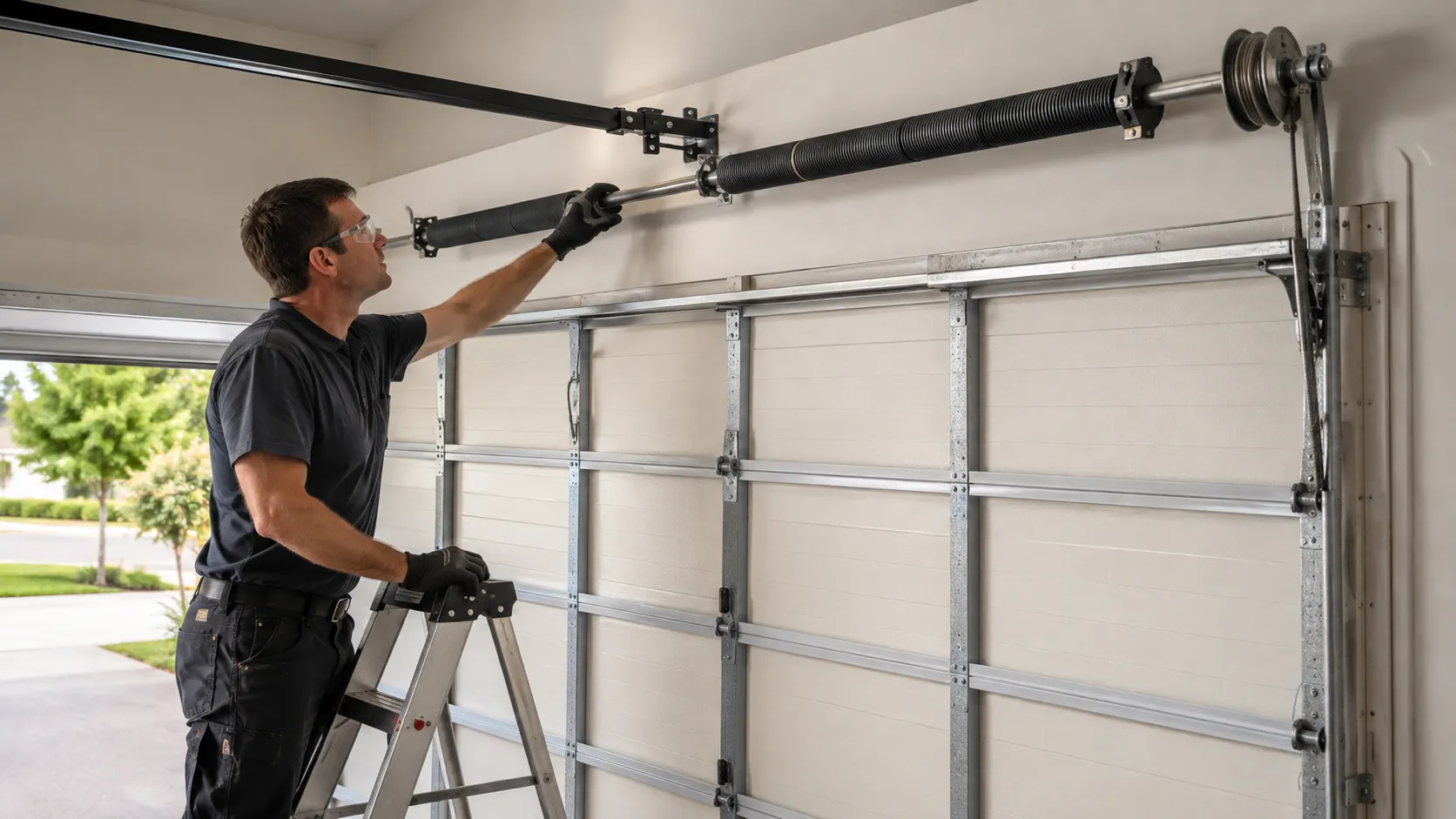
This part of Texas sits in a moderate-heat climate band, not a hard-freeze one, and that shapes what actually goes wrong with a door here versus somewhere with real winters. You're not going to see the classic cold-snap spring snap that gets talked about in colder states. What you see instead is heat fatigue - lubricant on rollers and hinges thinning out and running off during the hottest stretches, nylon idler pulleys and plastic gear sets softening and wearing faster than they would in a milder year-round climate.
Garage doors that face full sun for most of the day take the brunt of it. Steel panels heat up, the door expands slightly, and if the track alignment was already a little off, that expansion is enough to turn a minor rub into a binding door. Openers mounted near the ceiling of an un-insulated garage also run hotter than they're rated for, which shortens the life of the drive gear and the circuit board inside the unit.
We check lubrication and alignment on service calls for exactly this reason - it's cheap prevention against a heat-driven failure, not a cold one.
What Is Going On
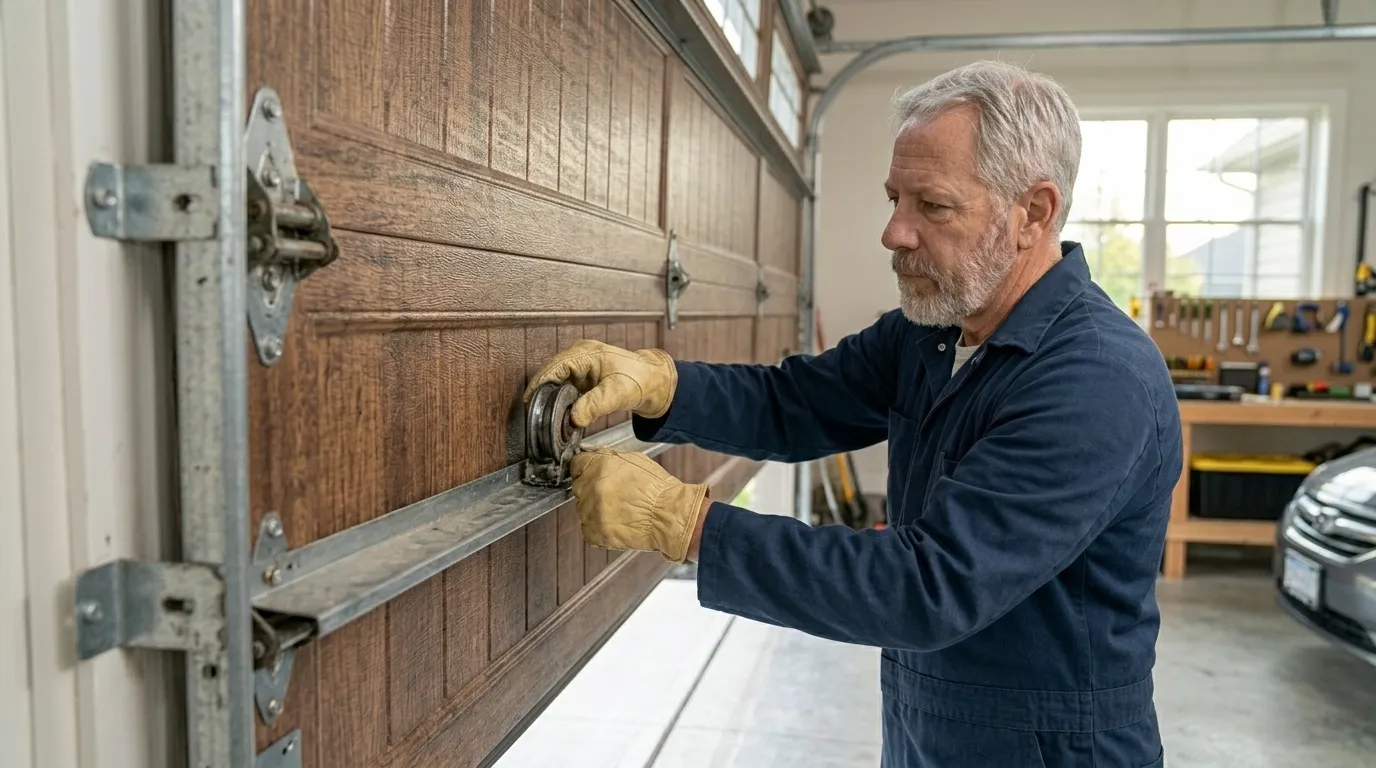
The housing stock across this service area is fairly consistent: mostly 1980s and 90s construction spread across two distinct pockets of similar-era homes. That consistency is actually useful when we're diagnosing a problem, because a door failure in a house from this era tends to follow a pattern - original torsion springs rated for a lighter door than what's now hung on them, or an opener from a mid-90s retrofit that was never matched to the door's actual weight.
We see a lot of double doors on side-mounted torsion systems, which was standard for the period, and a fair number of single doors that got upgraded to heavier insulated panels without anyone upsizing the spring to match. That mismatch shows up as a door that feels heavy to lift by hand, or an opener straining and burning out its gear faster than it should.
With about 783 owner-occupied houses in the area carrying this kind of hardware, it's not a rare situation - it's close to the norm. Knowing the housing age going in saves time on the diagnosis, because we're not guessing what decade the parts came from.
What the Weather Here Does to It
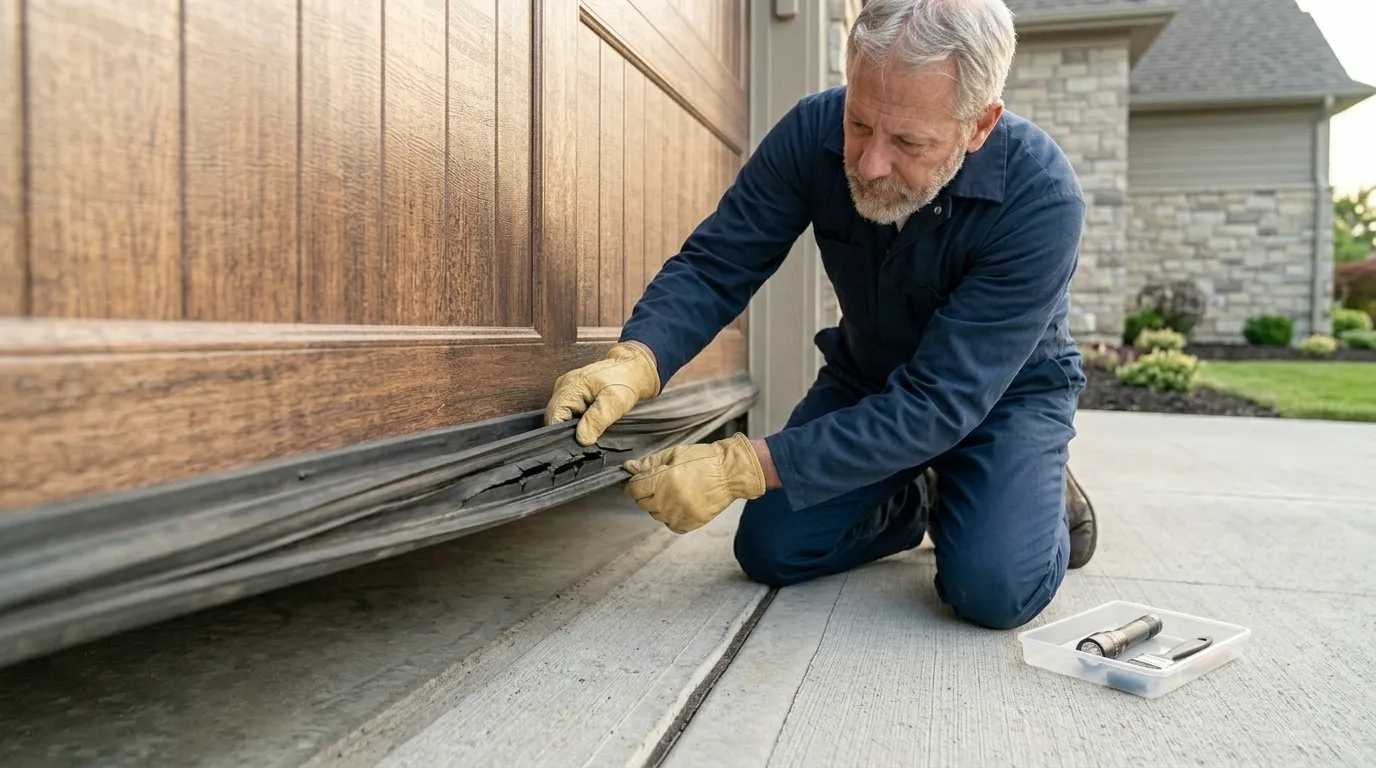
Because this is a moderate-heat climate rather than a freeze-thaw one, the wear pattern on doors here is steady rather than sudden. You don't get the dramatic mid-January spring failure that shows up in colder-climate service calls. What you get instead is gradual: seals drying and cracking from sun exposure, weatherstripping going brittle at the bottom of the door, and torsion springs cycling through summer heat that accelerates metal fatigue a little faster than it would in a cooler region.
Garage interiors here can run well above outside temperature by mid-afternoon, especially with a west-facing door. That heat load is hard on anything electronic - opener logic boards, photo-eye sensors, remote receivers - more than it is on the mechanical parts, though the springs aren't immune either.
We don't try to sell heat-resistant upgrades that don't exist. What we do is recommend a lubrication and tension check on a schedule that matches this climate rather than a generic one built for a colder part of the country, since that's the failure mode actually showing up on doors around here.
How We Can Help
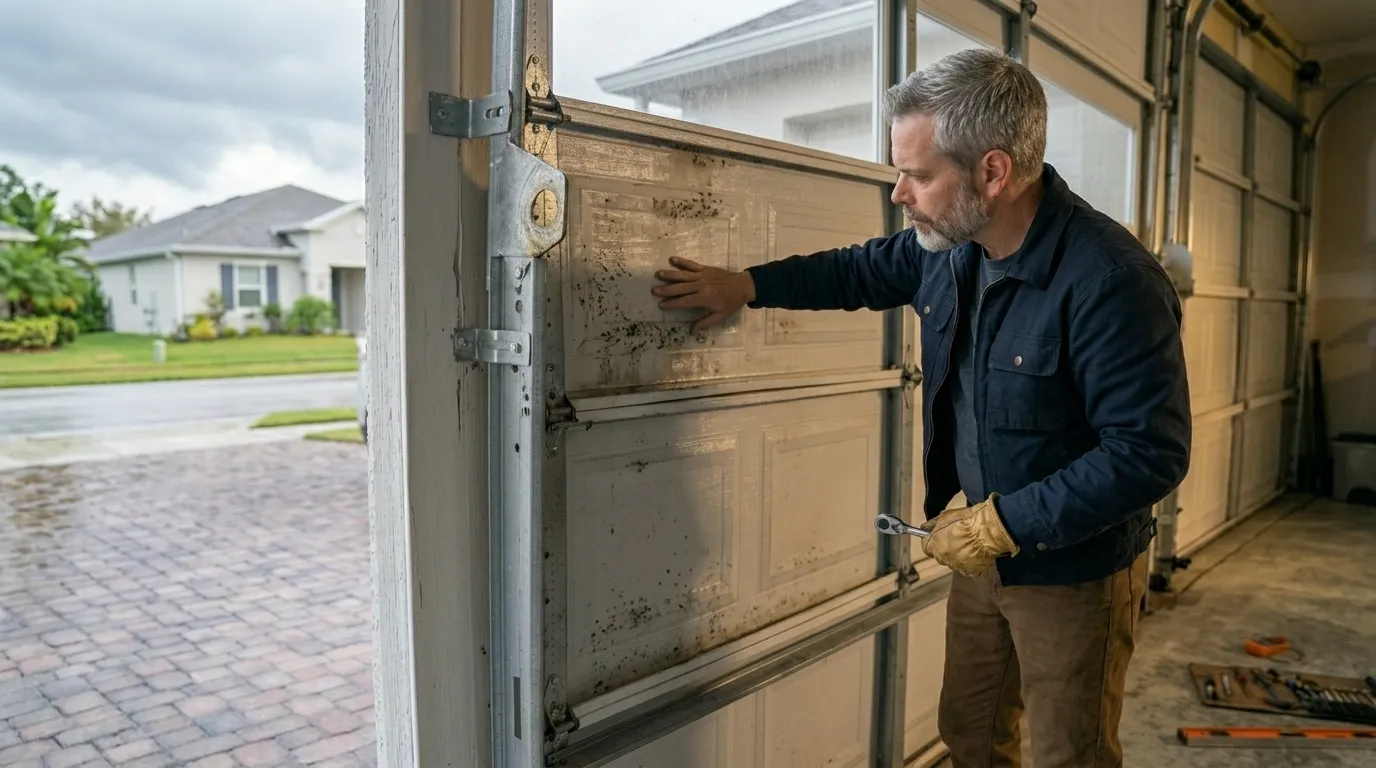
Garage Door Repair
Springs, cables, tracks, rollers, and openers fixed by a tech who explains the problem before touching anything.
Learn more →
Garage Door Installation
New sectional doors sized and installed for the housing stock actually built in this area.
Learn more →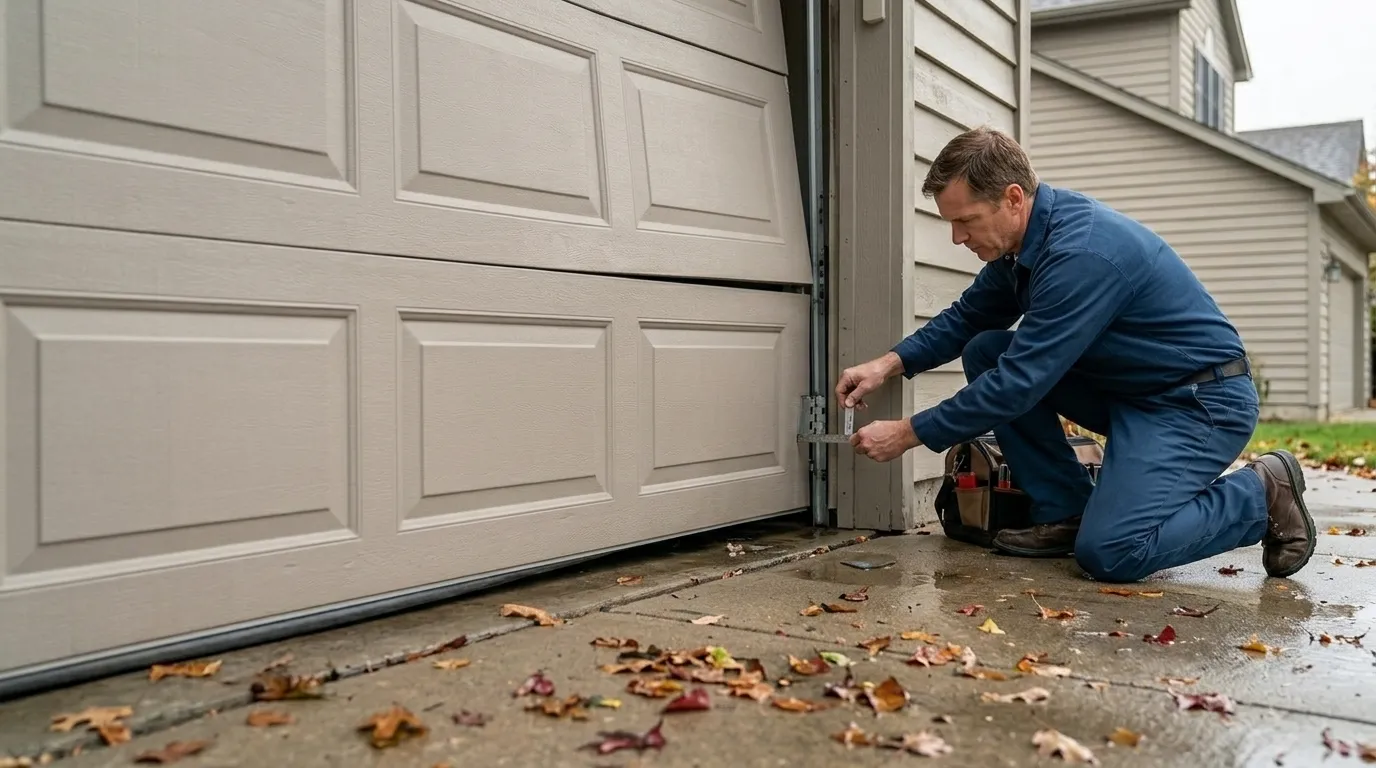
Garage Door Service
Tune-ups, lubrication, and safety checks that catch a small problem before it becomes a service call.
Learn more →Frequently Asked Questions
Why does my garage door bind up in the afternoon but not in the morning?
Steel panels expand slightly as they heat up through the day, and if the track alignment is even a little off, that expansion is enough to make the door rub or bind by mid-afternoon. It usually loosens back up overnight. It's a heat-expansion issue, not a sign the door is failing outright, but it's worth having the track checked.
Is my opener too old to be worth fixing?
If your house dates to the 1969-1997 window common in this area, there's a decent chance the opener is a mid-life retrofit rather than original. We check the drive gear, capacitor, and board condition on-site and tell you honestly whether a repair holds up or whether you're better off replacing the unit.
Do garage doors here fail more in summer or winter?
Summer wear is the bigger factor in this climate band. Heat thins lubricant, softens plastic gears and pulleys, and stresses electronics inside the opener. We don't see the cold-weather spring snaps that come up in colder-climate discussions, so our maintenance recommendations are built around heat exposure instead.
Have a Door That Needs a Second Opinion?
Call and describe what it is doing - we will tell you what it likely is.